
New to crochet? This friendly glossary explains the most common words and abbreviations you’ll see in patterns, videos, and tutorials. Keep it handy as you learn.
1. Stitch Basics
Chain (ch) — The starting stitch for most projects. You make a row of loops that other stitches are worked into.
Slip knot — The first loop you put on your hook to begin a chain. It tightens when you pull the yarn tail.
Slip stitch (sl st) — A tiny joining stitch. Good for connecting rounds, moving across stitches, or finishing neatly.
Single crochet (sc) — A short, dense basic stitch. Often the first stitch beginners learn.
Half double crochet (hdc) — A bit taller than single crochet but shorter than double crochet. Soft and slightly stretchy.
Double crochet (dc) — A tall, common stitch that works up quickly and gives a looser fabric.
Treble/triple crochet (tr) — Taller than double crochet, used for airy or lacy fabric.
Yarn over (yo) — Wrapping the yarn over your hook. It’s the basic motion used to form most stitches.
Turning chain (t-ch) — A small chain at the start of a row that brings the yarn up to the height of the next row’s stitches.
Increase (inc) — Making more stitches than you had before, usually by working two or more stitches into the same stitch.
Decrease (dec) — Combining two or more stitches into one to reduce the stitch count and shape your project.
Back loop only (BLO) — Working into just the back half of a stitch’s “V” to create a ridge or extra stretch.
Front loop only (FLO) — Working into just the front half of a stitch’s “V” for a different texture or ridge effect.
2. Tools & Materials
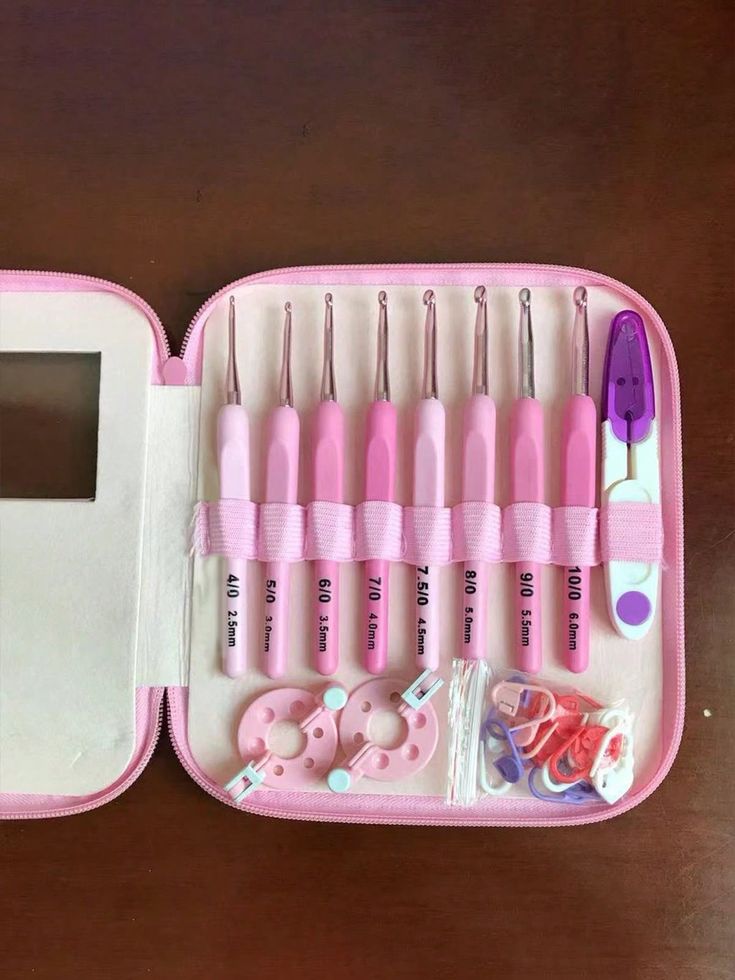
Crochet hook — The main tool for crochet. Hooks come in different sizes, labeled with letters, numbers, or millimeters.
Yarn weight — How thick the yarn is (for example: lace, DK, worsted, bulky). It affects how big and warm your project will be.
Stitch marker — A small clip or ring that marks a specific stitch or the start of a round so you don’t lose your place.
Tapestry/ yarn needle — A large needle with a blunt tip used to weave in yarn ends and sew pieces together.
Row counter — A tool or app that helps you track how many rows or rounds you’ve completed.
Blocking — Gently shaping and flattening your finished piece with water or steam so it lies neatly and to size.
Tension — How tightly or loosely you hold the yarn. It changes how firm, soft, or stretchy your fabric feels.
Gauge — How many stitches and rows you get in a measured square (often 4 in/10 cm). Matching gauge helps your project come out the right size.
The Kit that i’ve found that works the best for starters https://amzn.to/4vVLlbr
What Ive liked best about this kit
it provides you with good quality hooks and comes with all the other essentials you need like ruler, scissor, needles, stitch marker and even some yarn to start your first project while staying under $20
3. Pattern Lingo & Abbreviations
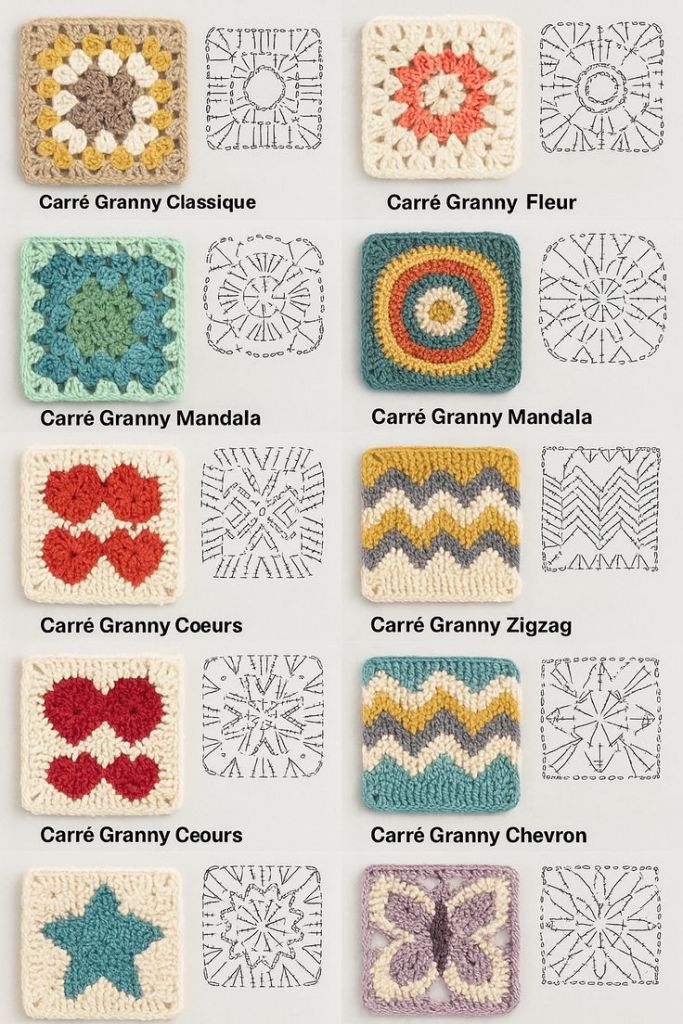
Pattern repeat (*) — Instructions between * * or ( ) that you repeat several times across a row or round.
Row vs round (rnd) — A row is worked back and forth in straight lines. A round is worked in a circle, often for hats or amigurumi.
Right side (RS) — The “front” of your work that will show when the item is used or worn.
Wrong side (WS) — The “back” of your work, usually the inside or less visible side.
Front post / back post stitches (FP / BP) — Stitches worked around the stem of a stitch instead of the top loops, used for ribbing and texture.
Work into the … — A phrase telling you where to place your hook, such as into the same stitch, next stitch, or specific space.
Skip (sk) — Do not work into this stitch or space; move on to the next one.
Repeat (rep) — Do the same steps again, often a set of stitches or a sequence in a row.
Frogging — Ripping out your stitches to fix a mistake or redo a section. (You “rip-it, rip-it,” like a frog.)
Frogging vs tinking — Frogging is pulling out lots of stitches at once; tinking is slowly undoing stitches one by one.
Fasten off (FO) — The steps to securely end your yarn so your project doesn’t unravel.
Weaving in ends — Using a needle to hide yarn tails inside your stitches so the project looks neat and secure.
Amigurumi — The Japanese word for small crocheted stuffed toys, often worked in continuous rounds.
Continuous rounds vs joined rounds — Continuous rounds spiral without closing each round. Joined rounds are closed with a slip stitch before starting the next round.
4. Quick Reference Summary
Here’s a short list of the abbreviations from this guide for easy checking while you crochet:
- ch — chain
- sl st — slip stitch
- sc — single crochet
- hdc — half double crochet
- dc — double crochet
- tr — treble / triple crochet
- yo — yarn over
- t-ch — turning chain
- inc — increase
- dec — decrease
- BLO — back loop only
- FLO — front loop only
- rnd — round
- RS — right side
- WS — wrong side
- FP / BP — front post / back post
- sk — skip
- rep — repeat
- FO — fasten off
You don’t need to memorize everything at once—just come back to this page whenever a pattern uses a term you’re not sure about.
 Honey Stitch
Leave a comment